I designed AI confidence and fallback patterns before generative AI made them mainstream.
In 2016, I led UX for a Watson-powered shopping assistant that shipped on The North Face. The models were weaker, but the design questions were the same: what does it know, when does it fail, and how does a person know what to trust?
At a glance
My roleLead UX, research to launch
Era2016, pre-generative
EngineIBM Watson
I designedConfidence, fallback, trust
ShippedThe North Face, web and mobile
I builtMetrics and session tracker
The project
The situation
The AI was fragile. It could not always understand an open question or recover from broken context. The design problem was not making it sound human, it was making it useful inside its limits.
The move
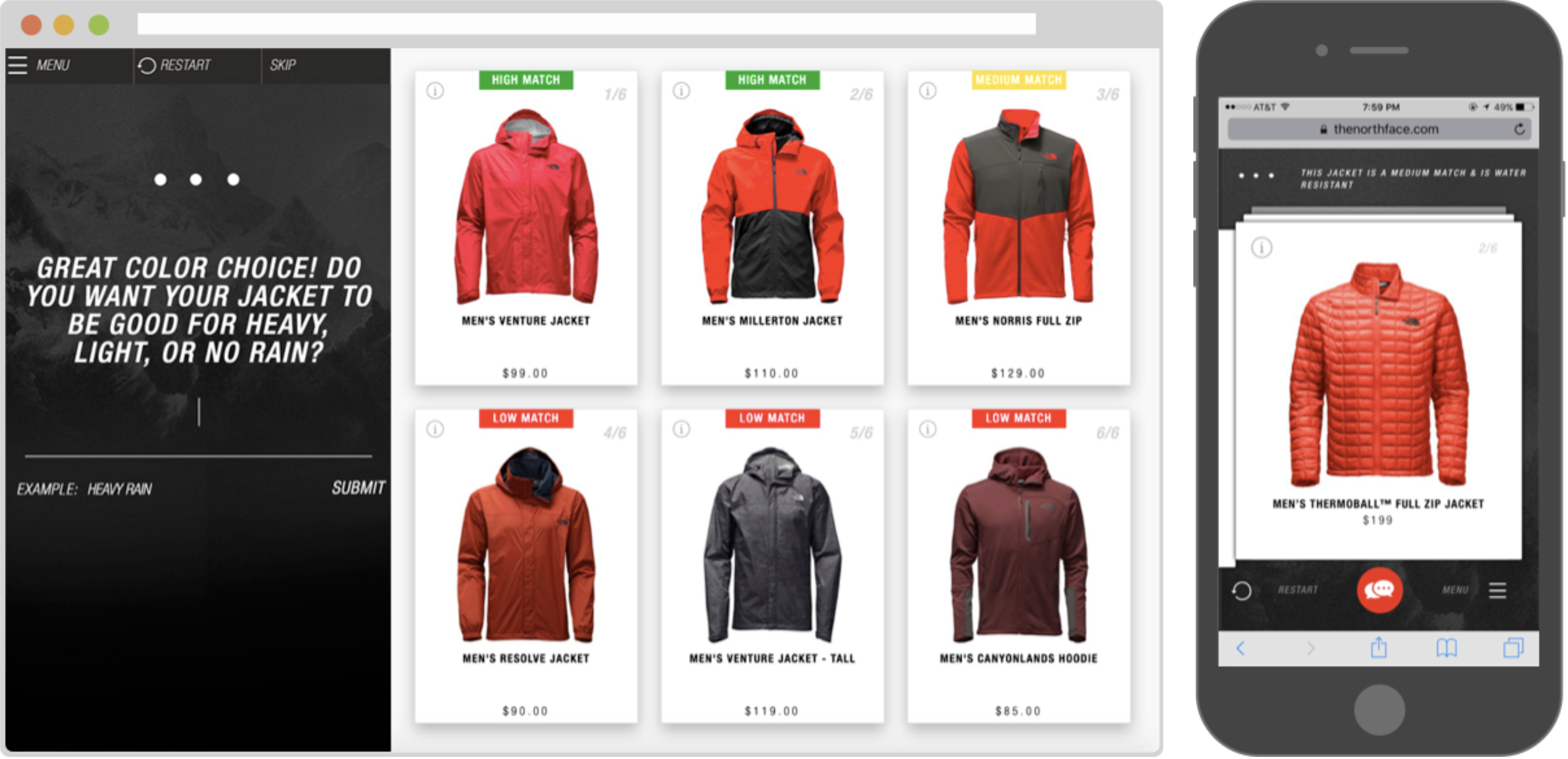
I designed progressive fallback: open chat when the model was confident, a guided question and answer when it needed structure, and a keyword search when language failed. Every recommendation also showed a high, medium, or low match, so shoppers could calibrate trust instead of taking the machine on faith.
Progressive fallback: each level stays useful as the model's understanding drops.The shipped assistant on The North Face: every recommendation labeled a high, medium, or low match.
The North Face assistant is offline. The questions are not.
How an assistant earns trust, how it shows what it is unsure of, and how a person steps in when it is wrong. Those are the questions I work on now. The models finally caught up to the problem.